


.svg)
Waka Tere
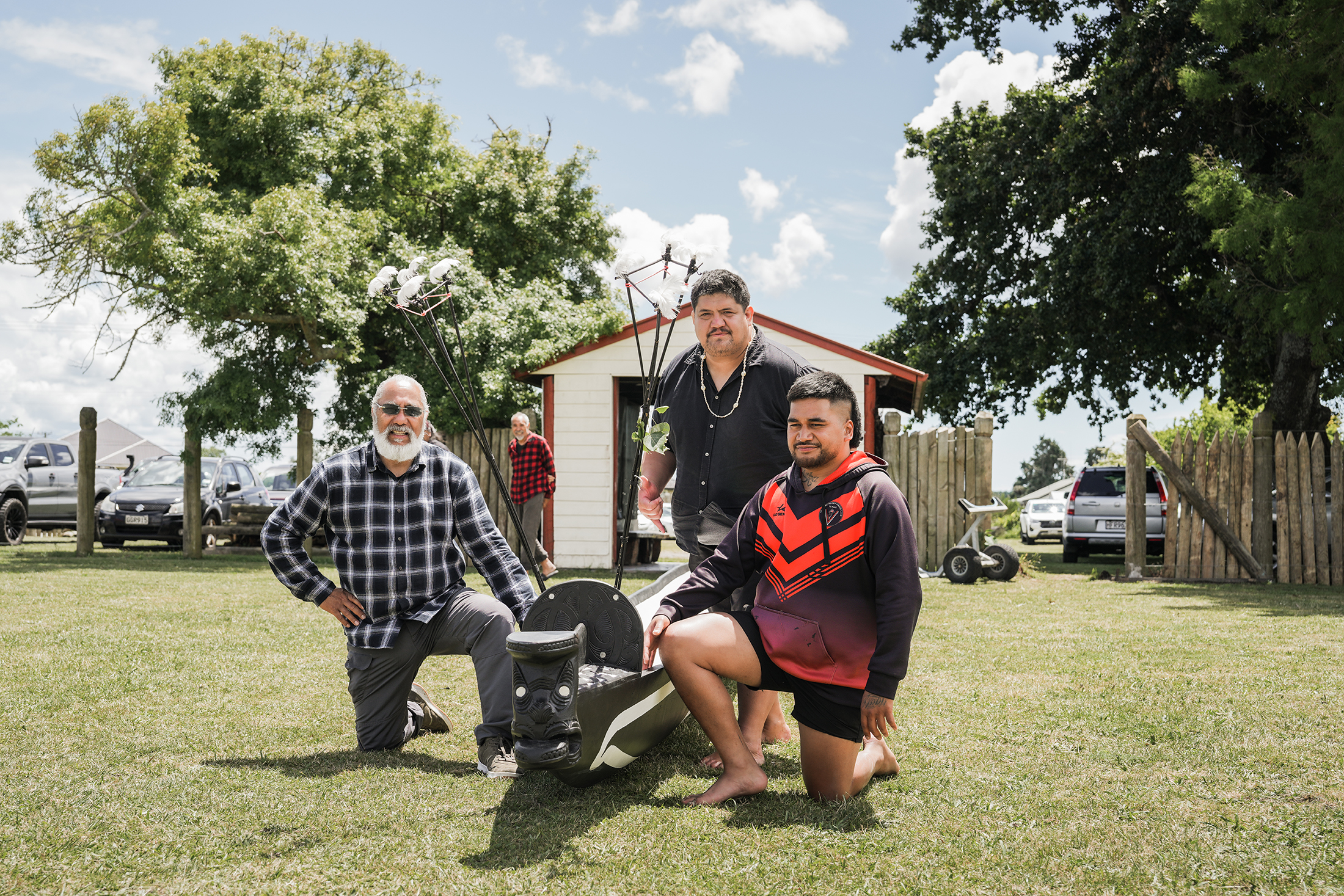
The newly carved wakatētē Te Ao Marama has embarked on her maiden voyage, marking a powerful moment of reconnection for this community.
The newly carved wakatētē Te Ao Marama has embarked on her maiden voyage, marking a powerful moment of reconnection for this community.
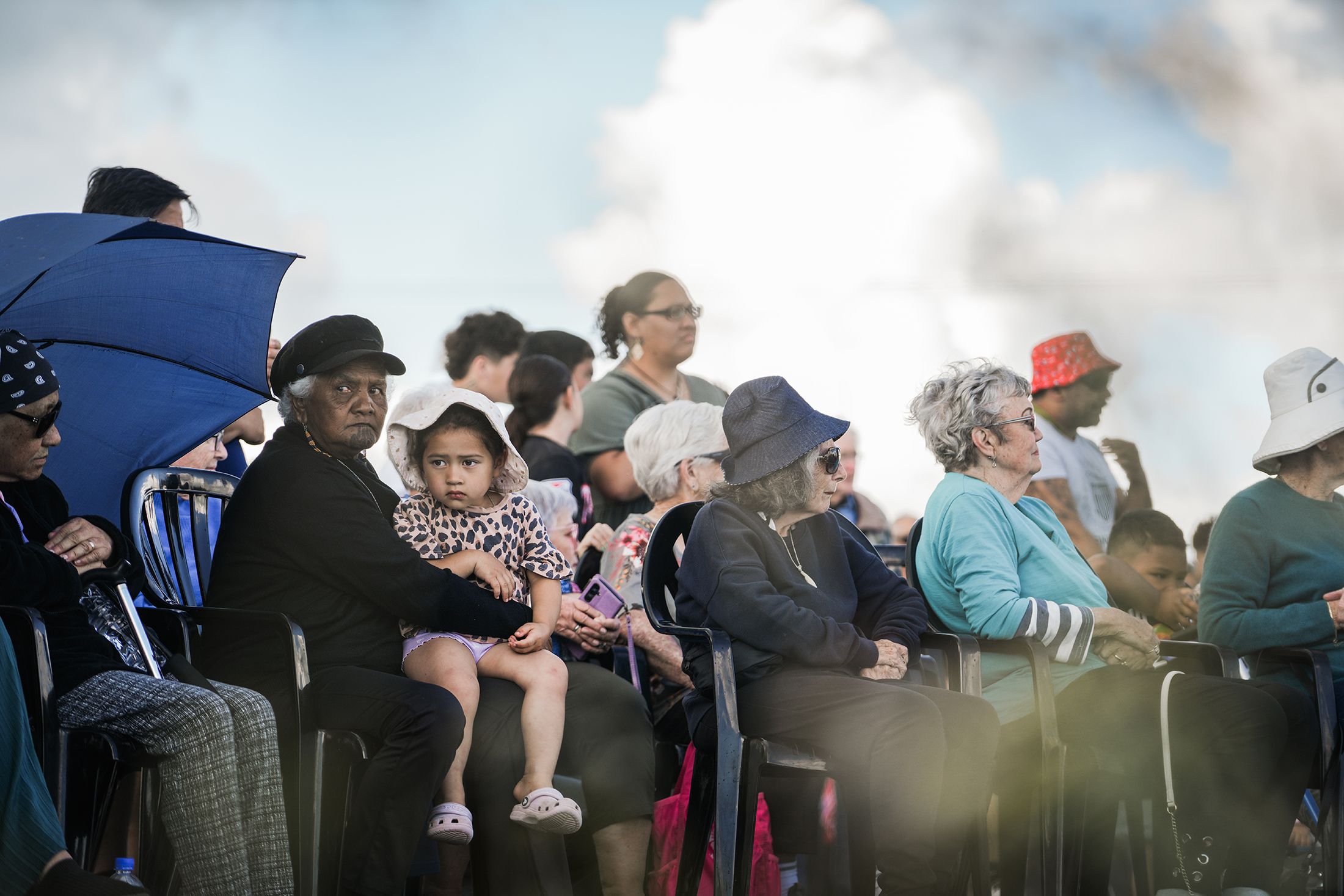
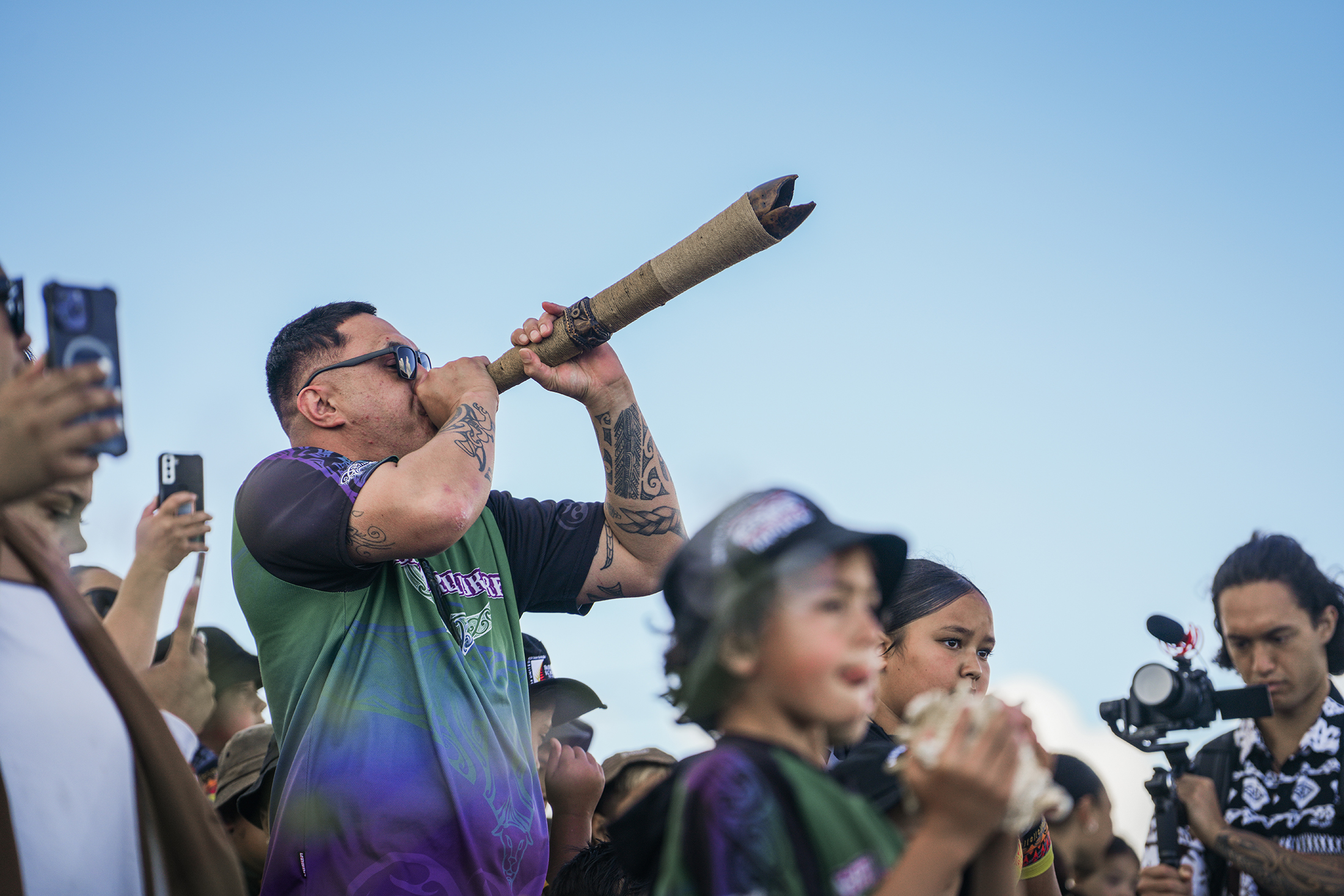
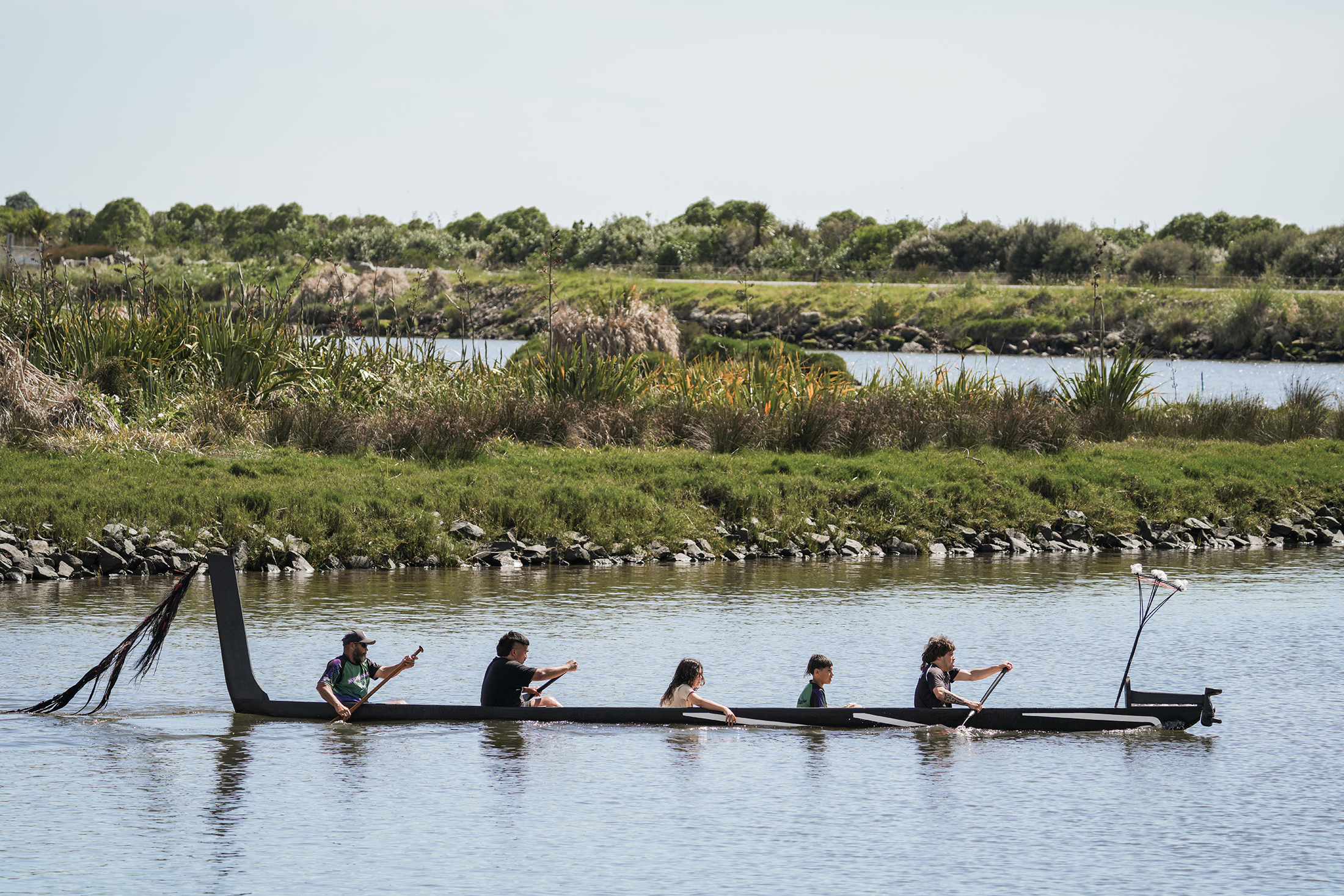
The river banks were bursting with proud whānau and community, as the recently completed wakatētē (river waka) Te Ao Marama took her maiden voyage in Kaituna River. This is the final stage of “Waka Tere” a six-month rangatahi development programme, which aims to empower rangatahi by building their cultural identity and community connections.
Waka builder Haimona Brown (Ngāti Rangiwewehi, Te Arawa) works with Ngā Kākano Foundation and Tapuika iwi, to bring this world-leading programme to life. “Waka Tere is an initiative that came from the dreams and aspirations of Tapuika leadership and other community leaders who want to look after the river. The launch was a moving, transformative day, it enhanced the spirituality and strength of our people,” he says.
Before this programme began in 2024, there hadn’t been a wakatētē on Kaituna for more than 100 years. While the outcome of the programme is a taonga waka carved from totara, Haimona says Waka Tere is more of a health initiative that uses Mātauranga Māori practices to improve the general wellbeing of the people. “The river is where it all starts from. If the river is healthy, the people are healthy. That’s the main kōrero that resonated with me. So here we are, from that dream to reconnect our people with the awa and their identity,” the father-of-one says.
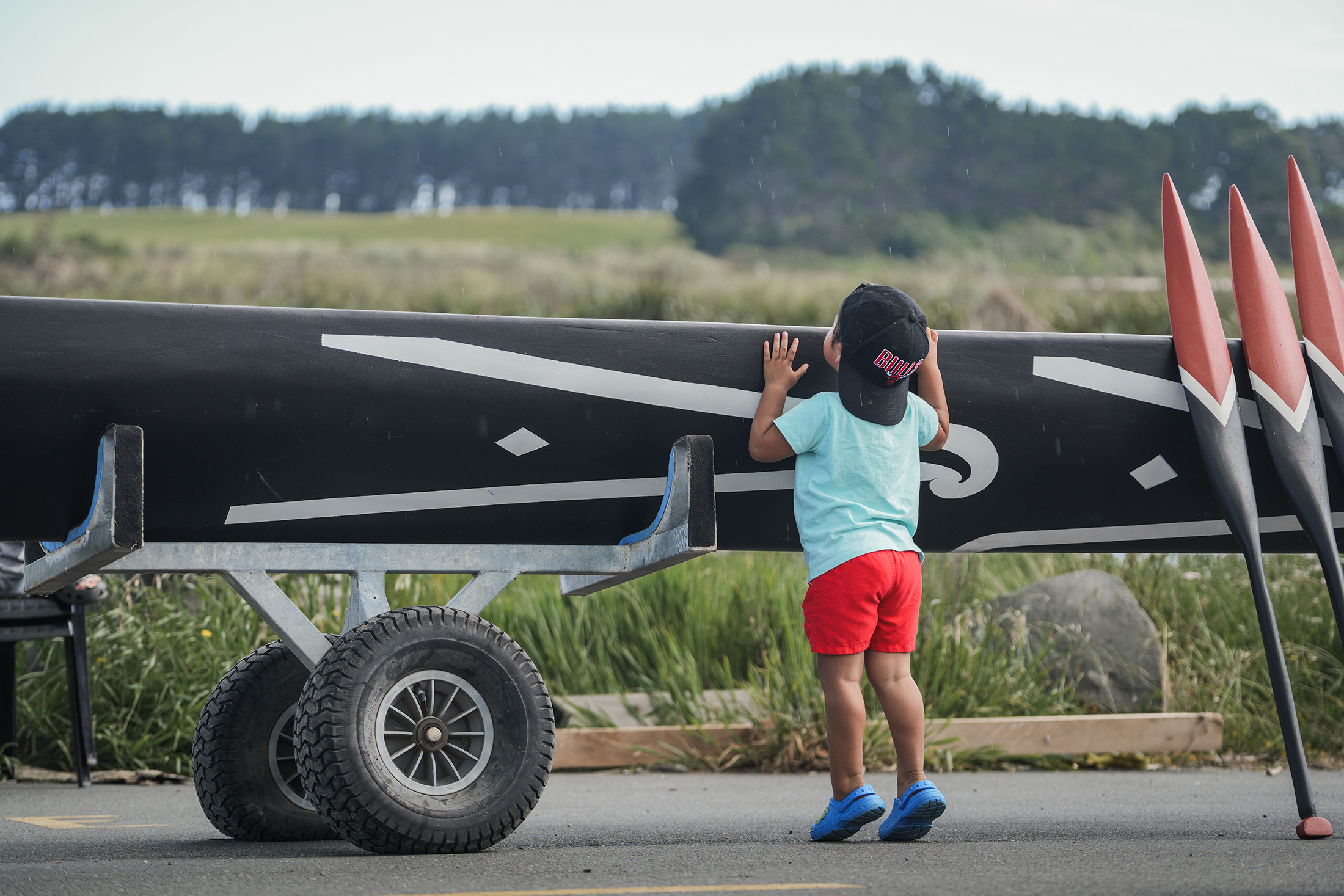
Throughout the six-month programme, students spend one day a week either helping to build the waka, or reconnect with Mātauranga Māori. They learn about waka, talk about how their ancestors came to Aotearoa as well as going into the ngahere to learn how to embrace nature. Haimona says he’s helping people learn how to “go with the rhythm of nature”. “This programme reinforces who they are. Building the waka gives them a sense of belonging and brings them closer to how their ancestors used to live,” says Haimona.
Every waka is treated like a person and given an identity and a personality during the launching ceremony. This waka, named “Te Ao Marama”, means the world of light.
“As you build the waka, you take observations. We came up with that name, not just me, it was the community. We sat down and discussed the name as it will impact the iwi. So, the world of light, it talks of a new dawn and hope for the future.”
While only 10 students, mostly from Te Puke High School, were part of the programme, it took the whole community, iwi, hapu to help shape Te Ao Marama, who was carved for Tia Marae, Ngāti Marukukere, Tapuika. “From the people filing the paperwork, to the kaumatua who shared their wisdom, everyone has their input, and that’s what adds to her story, and the mauri.”
“The river is where it all starts from. If the river is healthy, the people are healthy. That’s the main kōrero that resonated with me. So here we are, from that dream to reconnect our people with the awa and their identity.”
This waka was carved “as close to the traditional shape as possible,” based on the remnants of three waka, each more than a hundred years old and living around Rotorua. “These particular waka are “river waka”. They’re everyday waka that we use because the people of the Kaituna are river people. It’s our identity. It’s who we are. It’s my job to reintroduce that to the rangatahi that waka are a symbol of hope and reconnecting to the past.”
Haimona was brought up on the ocean in the far north and his father was a commercial fisherman. He had grand plans of playing professional rugby, but after breaking some bones his path detoured and he trained to become a teacher. During his studies in 2010, he met master carver and navigator Sir Hekenukumai Busby who in 1992 built and navigated the inaugural voyage of Te Aurere, the first waka hourua (double hulled ocean sailing waka) to be built in Aotearoa in 600 years.
“Out of all of the Māori art forms, waka building is the most endangered. We hadn’t had a waka on the river in a hundred years. It’s an important job to rebuild the waka culture among our people.”
Te Aurere was waiting for her revival in 2012, which Haimona played a part in. He helped restore her and then spent 10 months on the “Waka Tapu” expedition, where Te Aurere and a newer waka Ngahiraka Mai Tawhiti travelled to Rapanui (Easter Island) and back, retracing the journey of their ancestors. The crew used only traditional celestial navigation to guide them – relying on the stars, sun, moon, ocean swells and currents, along with bird and sea life rather than modern technology such as GPS. “It was the best thing that ever happened to me,” he says.
“It opened up my eyes to the world and our atua, our gods. Being out at sea you really get to understand how small you are in the grand scale of things. You’re a needle in the haystick and the world’s a big place and you understand your insignificance. It taught me humility. I was also able to embrace ancient whakapapa ties throughout the Pacific Ocean. We share a common culture. It was a trip of a lifetime,” Haimona says.
Following this voyage, Haimona spent three years learning the ancient art form of waka building led by the late Tohunga Sir Hector Busby at the newly established “Te Wananga o Kupe mai Tawhiti”.
“Out of all of the Māori art forms, waka building is the most endangered,” Haimona says.
“We hadn’t had a waka on the river in a hundred years. It’s an important job to rebuild the waka culture among our people.”
This is the second year of Waka Tere. Ngā Kākano Foundation and Tapuika hope to run this programme annually, so all Tapuika marae have a waka, followed by annual events to connect wider communities with Kaituna. “This programme exceeded all expectations,” he says.
Joshua Te Riu Roberts (Tapuika) has been learning the art of waka building under Haimona since the programme began in 2024.
“Ko Tapuika te iwi, we are river people so it runs through my veins. My tūpuna, Tia, built the Te Arawa waka, who then had a son Tapuika who I descend from,” he says. The 29-year-old has always felt connected to his tūpuna and wants to continue this kaupapa.
“Kore he kupu, the feeling is unexplainable. To understand it all, you have to feel it. I would love to carry this kaupapa into the future. It keeps me grounded, humble and disciplined.”
